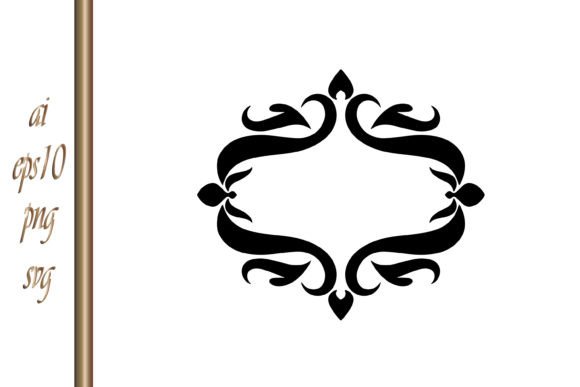
Vintage Damask Frame Border Pattern
First Impression: Elegant, Timeless, and Quietly Confident
Opening the zip archive for Vintage Damask Frame Border Pattern, I immediately felt that familiar quiet thrill—the kind you get when a design doesn’t shout, but still commands attention. This isn’t a loud, trend-chasing border; it’s a refined damask motif with balanced symmetry, subtle floral flourishes, and clean negative space built into its frame structure. The repeat feels organic, not rigid—ideal for wrapping around edges without visual fatigue. As an embroidery designer who’s stitched hundreds of borders for boutique aprons, nursery pillows, and personalized tea towels, I knew within seconds this pattern would translate beautifully to real fabric—not just as a digital illustration, but as a tactile, heirloom-quality detail.
Real-World Test: A Custom Embroidered Tote for a Local Boutique
Last week, I used Vintage Damask Frame Border Pattern to finish a linen-cotton tote bag for a small home goods shop in Portland. Their brand leans into “quiet luxury”—think hand-thrown mugs, beeswax wraps, and minimalist packaging. We placed the border along the top 2” hem, echoing the shape of the tote’s folded edge. Stitched in soft ecru cotton thread on oat-colored linen, it added structure without stiffness. Customers didn’t just notice it—they paused. One said, “It feels like something my grandmother would’ve chosen.” That’s the power of this design: it reads as intentional, handmade, and quietly valuable—not decorative filler.
Where It Shines (and Where It Asks for Thought)
Vintage Damask Frame Border Pattern excels in projects where elegance meets wearability:
- Custom apparel: Works especially well on sweatshirt hems, baby onesie cuffs, or the collar band of a linen shirt—places where a border adds polish without overwhelming.
- Embroidered patch: Its clean outer edge and moderate density make it ideal for iron-on or sew-on patches on denim jackets or backpacks.
- Holiday embroidery: On velvet pillow covers or wool-blend stockings, the damask texture deepens—feeling rich and seasonal without being cliché.
- Small shop product: For Etsy sellers offering monogrammed kitchen towels or boutique baby blankets, this border elevates the perceived value instantly—it says “curated,” not “mass-produced.”
But—and this matters—Vintage Damask Frame Border Pattern isn’t universally forgiving. I tested it on a lightweight rayon challis blouse and saw slight shadowing through the fabric due to moderate fill stitch density. On highly textured bouclé or thick terry cloth, some of the finer inner scrolls softened visually. And on curved surfaces like cap brims? It needs careful digitizing adjustment—this is a *digital embroidery file*, not a pre-digitized machine embroidery design. You’ll need to scale thoughtfully and possibly simplify corners depending on your hoop size and fabric drape.
Design Integrity in Action
What makes Vintage Damask Frame Border Pattern stand out among other Illustrations in the Graphics category isn’t just its aesthetic—it’s how it holds up under scrutiny. When stitched at 3.5" wide on a medium-weight cotton poplin, the satin stitch lines stayed crisp, the scrollwork remained legible (no “blobbing”), and the spacing between elements allowed breathability—critical for items meant to be washed regularly, like baby embroidery or kitchen towels. That balance directly impacts customer trust: a clean, confident border signals care in execution, which reflects back on your brand consistency and handmade presentation.
I also ran quick black-and-white mockups—both on light and dark fabric backgrounds—and was pleased to see contrast hold across both. That versatility means less time tweaking thread colors for different product variants, and more time focusing on your craft business’s bigger picture: storytelling, packaging, and repeat buyers.
Practical Notes Every Embroidery Designer Should Keep Handy
Before stitching Vintage Damask Frame Border Pattern into your next finished product, take these steps:
- Test on scrap fabric first—especially if using stretchy fabric, thin fabric, or dark fabric where thread coverage matters.
- Check thread color contrast early. Damask relies on tonal nuance; a high-contrast combo (e.g., navy on cream) works, but avoid muddy mid-tones unless intentional.
- Review stitch density in your embroidery software. If planning for frequent washing (baby embroidery, holiday embroidery), consider reducing density slightly in tight scroll areas.
- Confirm hoop size compatibility. This design scales well, but extremely tight corners may require repositioning on smaller hoops.
- Inspect small details at actual stitch size—some inner loops are delicate. If using on textured fabrics or layered garments, test stabilizer pairing (cutaway + tear-away often works best).
- Use proper stabilizer. Even with medium-weight fabric, the damask’s repeating curves benefit from stable backing—especially for custom apparel or embroidered patch applications.
- Verify licensing before selling finished items or digital products. Since this is a downloadable digital product, confirm whether commercial use is permitted for your craft business or Etsy seller model.
Final Thought: A Design That Earns Its Place
Vintage Damask Frame Border Pattern doesn’t try to do everything—and that’s its strength. It’s not a standalone focal point, nor is it background noise. It’s the thoughtful accent that makes a personalized gift feel considered, a small shop product feel elevated, and a holiday embroidery project feel timeless rather than timely. For embroidery designers, Etsy sellers, and creative entrepreneurs who value clarity over clutter and craftsmanship over convenience, this is a reliable, mood-lifting design asset—one that earns its place on fabric, not just in the library.