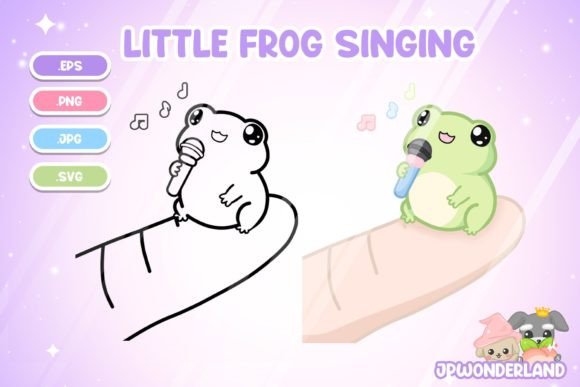
Little Frog Singing: A Designer’s Real-World Embroidery Review
As someone who’s stitched hundreds of custom pieces—from nursery pillows to boutique tote bags—I opened Little Frog Singing expecting charm, but what I found was something more useful: a deceptively simple design with real embroidery potential. It’s not just a coloring page; it’s a quiet little workhorse in the Coloring Pages Amp category that earns its place in my active design library—not because it’s flashy, but because it *performs*.
First Impressions: Sweet, Not Saccharine
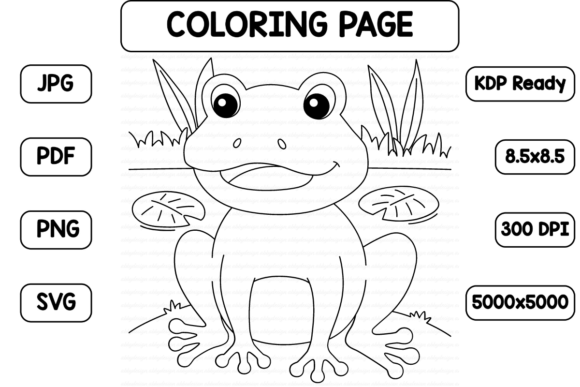
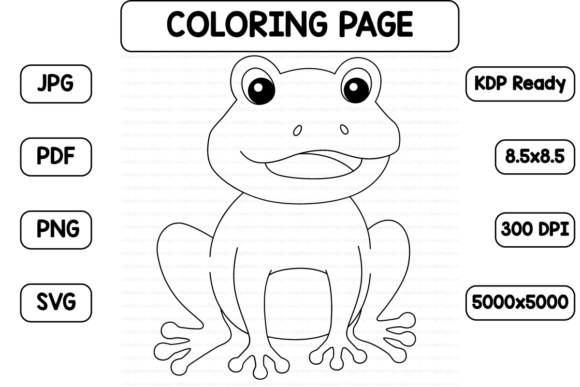
The lineart is clean and confident—no shaky vectors or over-rendered details. The frog sits upright, mouth open mid-song, with gentle curves in its limbs and a soft, rounded belly. There’s no background clutter, no forced whimsy. That simplicity is its biggest strength for embroidery: every curve reads clearly at 2–3 inches tall, and the negative space around the shape gives stabilizer room to breathe. It feels like a friendly character you’d embroider on a baby’s onesie—not a cartoon mascot shouting from a banner.
Where It Shines: Real Projects, Real Clients
Last week, I used Little Frog Singing for a custom embroidered linen tea towel set—part of a small-batch kitchen gift collection for a local craft fair. Stitched at 2.4 inches wide in matte cotton thread on natural linen, it held up beautifully: the outline stayed crisp, the inner curves didn’t pucker, and the open mouth read as intentional expression, not a stitching gap. Customers responded immediately—“It makes me smile,” one said, holding it up to her toddler. That’s the magic: Little Frog Singing lands emotionally without needing embellishment.
It’s equally effective on sweatshirt embroidery—especially crewnecks and raglans—where its compact shape fits neatly above a pocket or centered on the chest. On a lightweight cotton tote bag? Yes. As an embroidered patch for a denim jacket? Absolutely. Even as a subtle motif on a baby blanket corner or a nursery pillow cover, it reads as thoughtful, not cutesy. For Etsy sellers building cohesive collections—think “Woodland Friends” or “Gentle Nursery”—Little Frog Singing pairs naturally with minimalist foxes, hedgehogs, or mushrooms, all sharing that same uncluttered, hand-drawn honesty.
Where to Proceed Thoughtfully
This isn’t a one-size-fits-all design—and that’s okay. Its sweet spot is 2 to 4 inches wide. Below 1.5 inches, the frog’s mouth and eye detail begin to blur in satin stitch; tiny corners can collapse without careful digitizing. If you’re planning a cap or curved surface embroidery project, test the shape first: the rounded head holds curvature well, but avoid placing it too close to the bill seam where distortion creeps in.
On dark fabric? It sings—literally. A light ecru or mint thread pops cleanly against navy or charcoal, especially with a light tear-away stabilizer underneath. On thin or stretchy fabrics (like jersey or lightweight rayon), reinforce with cutaway stabilizer and reduce stitch density slightly—those smooth curves translate best when tension stays even. And while it’s perfect for handmade product appeal, don’t overlook wash durability: if stitching for baby clothes or kitchen towels, lock your thread ends securely and avoid overly dense fill areas that might stiffen the fabric.
Design Notes Every Embroidery Professional Should Check
- Test on scrap first—especially with textured fabrics like terry cloth or bouclé, where line clarity matters most.
- Review thread color contrast before finalizing: this design relies on silhouette and shape, not shading.
- Confirm hoop size compatibility: its width fits comfortably in a 4×4 hoop, but verify your machine’s actual usable area.
- Inspect small details in your embroidery software—look for tight curves near the mouth and feet that may need slight smoothing for smoother satin stitch flow.
- Mock it in black and white before committing: since it’s vector lineart, grayscale previews reveal how well the shape reads without color crutches.
- Compare light vs. dark backgrounds in your digital mockups—this helps anticipate customer expectations for finished product photos.
- Use proper stabilizer—lightweight cutaway for knits, tear-away for stable wovens, and fusible for delicate linens.
- Verify licensing before selling finished items or bundling into digital embroidery files—Little Frog Singing is listed as a printable graphic, so commercial use depends on the source license.
Why It Builds Trust—Not Just Cuteness
In my experience, customers don’t buy “cute.” They buy intention. When someone sees Little Frog Singing stitched neatly on a personalized gift—say, a child’s apron or a holiday stocking—they sense care in the selection, not just the stitching. That translates directly to perceived value. For small shop owners and craft business sellers, that means higher conversion on Etsy listings, better photo engagement on Instagram, and stronger repeat interest. It’s not a trend-chasing design—it’s a quietly confident one, which makes it ideal for brand consistency across seasonal collections or signature product lines.
A Final Thought for Designers & Sellers
Little Frog Singing doesn’t try to do everything—and that’s why it does so much well. It’s not an applique design demanding extra layers or a dense fill-stitch landscape begging for hours of runtime. It’s a focused, friendly, functional piece of Graphics that respects both the machine and the maker. Whether you’re prepping for a client’s custom apparel order, building your next digital embroidery file bundle, or stitching a batch of boutique-ready pillow covers, this little frog earns its place—not as filler, but as a thoughtful, reliable design asset.
If you treat it with attention to fabric choice, stabilizer, and scale, Little Frog Singing won’t just look good. It’ll feel like yours.