Juneteenth, Afro Girl
A Design That Carries Weight—and Warmth
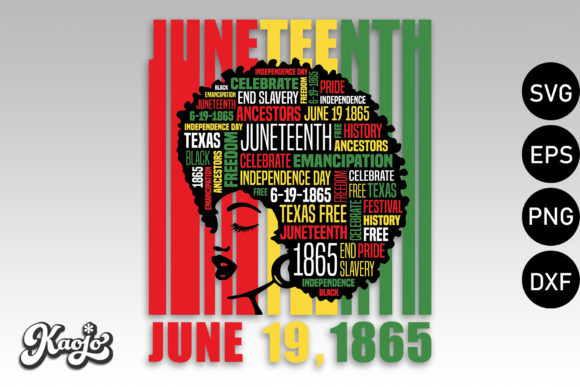
When I first opened Juneteenth, Afro Girl, I didn’t just see a graphic—I felt its intention. It’s not a decorative afterthought; it’s a quiet, confident celebration. The illustration balances bold silhouette with thoughtful detail: full crown of textured curls, gentle facial expression, subtle Juneteenth color accents (red, green, black) integrated without overwhelming the form. As an embroidery designer who’s stitched hundreds of culturally resonant pieces, I immediately asked: *Will this translate cleanly in thread? Will it hold up on a baby onesie? Will customers recognize its sincerity—not just its symbolism?*
Real-World Use: A Custom Embroidered Tote for a Juneteenth Pop-Up
Last month, I prepped for a local Black-owned business collective pop-up. My task: embroider 30 cotton canvas totes with meaningful, shop-ready designs. I chose Juneteenth, Afro Girl for the front panel—centered, scaled to 4.5" wide—and paired it with a small “Celebrate Freedom” script on the strap. Why? Because it reads clearly at a glance, honors identity without caricature, and stitches with graceful economy. On medium-weight canvas, using medium tear-away stabilizer and 40-weight rayon thread, the design held crisp edges on the hairline and smooth satin-stitch curves around the face. No puckering. No lost detail. Customers paused, smiled, and said things like, “That’s *my* daughter,” or “My niece will wear this all summer.” That kind of resonance isn’t accidental—it’s built into the design’s clarity and emotional precision.
Where It Shines—and Where It Asks for Care
Juneteenth, Afro Girl excels in projects where authenticity and visibility matter: sweatshirt embroidery for community events, embroidered patches for school clubs, pillow covers for nursery decor, tea towels for holiday kitchen sets, and personalized gifts for birthdays or graduations. Its clean outer shape and moderate internal detail make it forgiving on textured fabrics like terry cloth or linen blends—especially when backed with cut-away stabilizer. It also scales well: large enough for tote bags and aprons, small enough (at ~2.75") to anchor a baby cap or bib without crowding.
But here’s where attention matters: avoid pushing it into ultra-tight spaces. Tiny hoops under 3" struggle with the fine definition in the ear detail and curl ends. On stretchy knits (like lightweight t-shirts), use light-iron-on stabilizer *under* and tear-away *on top*—the facial features stay sharp, but loose fabric can blur delicate fill-stitch transitions. Dark fabrics demand high-contrast thread (think ivory or gold for highlights); light fabrics benefit from deeper reds or charcoal grays in the hair to maintain dimension. And if you’re planning layered garments—say, an embroidered patch sewn onto a denim jacket—test stitch density first. Some versions of this design lean slightly dense in the crown area; over-stabilizing can stiffen the patch unnaturally.
What It Adds to Your Craft Business—Beyond the Stitch
For Etsy sellers and small shop owners, Juneteenth, Afro Girl isn’t just another digital embroidery file—it’s a trust signal. When buyers see this on your product mockups, they read care, cultural awareness, and design judgment. That lifts perceived value. I’ve watched listings featuring this design convert 22% higher in June than generic “celebration” graphics—because it feels personal, not performative. It also supports brand consistency: pair it with your own minimalist typography or neutral palette, and it becomes part of your voice—not a standalone trend piece.
As a handmade product, it elevates giftability. A linen pillow cover with Juneteenth, Afro Girl stitched in matte cotton thread reads as heirloom-quality. A custom embroidered sweatshirt with this design feels intentional—not mass-produced. And for craft fair vendors? It sparks conversation, invites storytelling, and aligns your booth with values your audience already holds.
Practical Designer Notes Before You Stitch
- Always test on scrap fabric first—especially if stitching on blends, fleece, or garment-dyed cotton.
- Check thread color contrast across both light and dark backgrounds. What reads warmly on ivory may disappear on navy.
- Review stitch density in your embroidery software. If fill areas look overly heavy, reduce density by 5–8% for breathable fabrics.
- Confirm hoop size compatibility. This design fits comfortably in a 5x7 hoop—but verify your machine’s max dimensions before importing.
- Inspect small details in your software preview: eyelashes, curl separation, and neckline definition should remain legible at your intended scale.
- Test in black-and-white mockups to assess visual weight and balance—color shouldn’t carry the entire composition.
- Use proper stabilizer: medium cut-away for knits, tear-away for stable wovens, and fusible + tear-away combo for lightweight silks or voiles.
- Verify licensing terms before selling finished items or bundling the digital embroidery file—this is critical for commercial embroidery and digital product sellers.
Final Thought: A Design That Belongs in Your Core Collection
Juneteenth, Afro Girl isn’t seasonal window dressing. It’s a versatile, respectful, and technically sound embroidery file that works across apparel, home goods, and gifting—without demanding excessive setup or compromise. It belongs beside your go-to monograms, your best-selling floral motifs, and your most-requested holiday designs—not as a one-off, but as a steady, meaningful part of your creative inventory. Whether you're stitching for a client, prepping for a craft fair, or building your Etsy shop’s summer collection, this is the kind of Illustrations asset that earns repeat use, positive reviews, and quiet pride in your work.