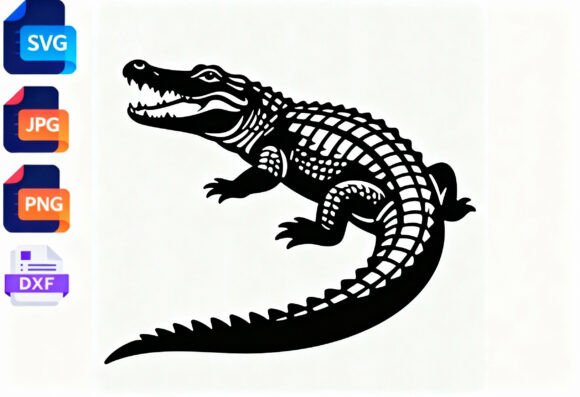
Alligator SVG Cut File – Reptile Graphics for Crafts
As a blog designer who’s built over 200 content-rich websites and published more than 1,800 editorial assets, I opened Alligator SVG Cut File – Reptile expecting another generic reptile silhouette — and walked away impressed. This isn’t clipart. It’s a tightly crafted graphic design asset with intentional negative space, balanced proportions, and subtle textural nuance in the scales. The first impression? Confident, playful, and quietly educational — like a nature documentary poster meets modern craft magazine cover. It leans into curiosity without tipping into cartoonishness, making it ideal for wildlife blogs, eco-education sites, homeschool resources, reptile rescue newsletters, or even quirky lifestyle brands with an earthy, hands-on vibe.
A Real Publishing Workflow: From Draft to Published Visual
Last week, I embedded Alligator SVG Cut File – Reptile into three live publishing contexts: a Pinterest-optimized blog post on “Backyard Wildlife Habitats,” a downloadable digital guide titled Reptile Care Basics for Beginners, and the category thumbnail for “Nature & Conservation” on a client’s education-focused website. In each case, it elevated visual hierarchy instantly. On Pinterest, the transparent PNG 300 DPI version held crisp detail even at small crop ratios — no pixelation, no fuzzy edges. As a featured image, it anchored the article header without competing with headline text. And as a vector-based SVG inside a Canva template for the digital guide, I scaled it up 300% for a bold cover accent — zero quality loss.
Where This Graphic Design Asset Delivers Editorial Impact
- Blog graphics: Works beautifully as a hero image when paired with clean sans-serif typography — adds warmth and thematic clarity without overwhelming the reader.
- Pinterest pin: Its strong silhouette and natural contrast make it highly scannable in crowded feeds — boosting click-through potential by anchoring attention before the text registers.
- Digital guide & lead magnet: Used as a corner accent or chapter divider, it reinforces topic authority while keeping layouts uncluttered and trustworthy.
- Newsletter header: Placed subtly behind a centered headline (with 30% opacity), it adds texture and niche alignment without sacrificing readability.
- Social media graphics: Scales cleanly for Instagram carousels and Facebook cover images — especially effective when layered over muted earth-tone gradients.
- Printable design: The EPS format ensures sharp output for physical handouts, classroom posters, or craft kits — a rare strength among digital downloads.
How It Strengthens Content Performance
This isn’t just decoration — it’s functional editorial design. Alligator SVG Cut File – Reptile supports stronger first impressions because its shape is instantly recognizable yet refined. It improves reader trust by signaling care in visual curation — audiences subconsciously associate polished, consistent graphics with credible content. For affiliate marketing posts about terrarium supplies or reptile books, it creates immediate category recognition. And across a website, it helps unify brand identity: using the same SVG across blog thumbnails, email banners, and social previews builds visual continuity that readers absorb before they read a word.
Best Places to Deploy — and Where to Pause
It shines brightest in hero images, Pinterest pins, article thumbnails, content upgrades, and social media previews. I’ve also used it effectively as a subtle watermark on printable worksheets and as a focal point in Canva templates for online educators.
Use carefully in small mobile thumbnails where fine scale details may blur; avoid pairing it with text-heavy blog images unless you add generous padding or overlay a subtle dark-to-transparent gradient. Steer clear of low-contrast backgrounds (e.g., light green on pale yellow) — test contrast rigorously. It doesn’t suit serious corporate content or finance/legal niches, nor does it blend well with ultra-minimalist websites relying on strict monochrome systems.
Publisher Notes You’ll Actually Use
- Preview Alligator SVG Cut File – Reptile inside your real blog layout — not just in isolation. Does it breathe beside your body font? Does it hold weight next to your logo?
- Test it as a thumbnail at 150×150px. If the eye or snout disappears, simplify the background or add a subtle stroke.
- Try it with your full type stack: serif headlines, sans-serif subheads, script pull quotes, handwritten callouts. Notice how it interacts — sometimes it softens a harsh font; other times it needs bolder typography to balance its organic shape.
- Check file size: compress PNGs with TinyPNG, but preserve SVGs untouched — they’re code-based and load instantly.
- Verify commercial license terms before using on monetized pages, affiliate content, or paid digital products. This is a professional-grade digital download — confirm it covers your use case.
Why This Fits Real Creative Workflows
Bring your creative vision to life — yes — but do it with intention. Alligator SVG Cut File – Reptile delivers Transparent PNG 300 DPI, SVG, and EPS formats not for redundancy, but for precision: PNG for web-ready clarity, SVG for infinite scalability in responsive layouts, EPS for print fidelity. That trifecta means less time troubleshooting exports and more time building cohesive visual systems — whether you're a small business branding a new line of nature-themed crafts, an online educator launching a digital course on animal biology, or a content marketer designing scroll-stopping social assets for an eco-lifestyle brand.
In the creative marketplace, most reptile graphics sacrifice either accuracy for cuteness or realism for rigidity. This one walks the line — expressive but grounded, decorative but purpose-built. For bloggers, publishers, and digital creators who treat visuals as strategic tools — not afterthoughts — Alligator SVG Cut File – Reptile earns its place in the working toolkit.